Precision CNC Milling Tools: A Practical Guide to Types, Selection and Machining Accuracy
News Details
What Are Precision CNC Milling Tools?
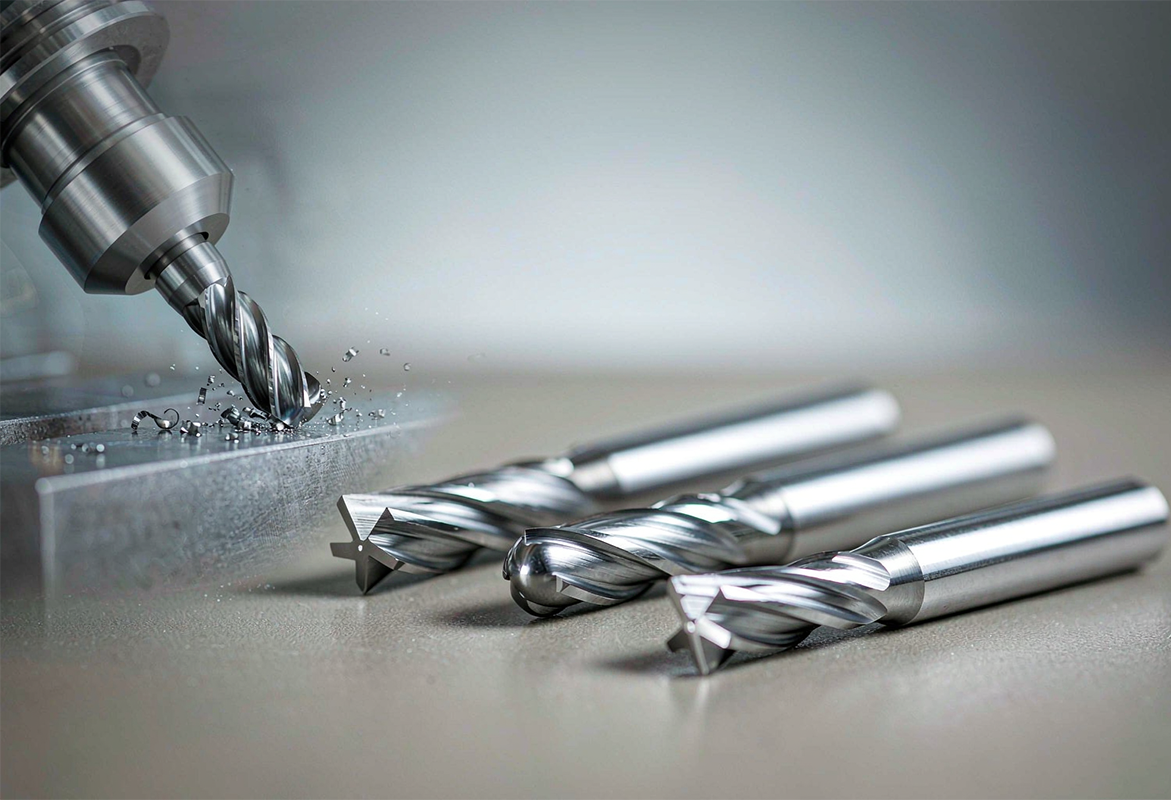
Precision CNC milling tools are the rotating cutting tools used on computer-controlled milling machines to remove material from a workpiece with controlled, repeatable accuracy. They include solid carbide end mills, ball nose cutters, corner radius cutters, roughing and finishing end mills, and face milling cutters, each shaped for a different cutting task. What separates a precision tool from a general-purpose one is not a single feature but a combination of substrate quality, geometry, coating and the cutting parameters it is run at.
For international buyers, the practical questions are consistent: which cutter type fits the part geometry, which substrate and coating match the workpiece material, what tolerance and surface finish can realistically be achieved, and how flute count and tool reach affect stability. This article answers those questions one by one, using widely accepted machining practice rather than marketing claims.
CNC Milling Cutter Types and Applications
Each cutter family solves a different machining problem, and matching the family to the operation is the first selection decision.
- Square end mills have flat cutting ends with sharp 90-degree corners. They are the most versatile family and are used for slotting, side milling, pocket machining and general-purpose milling where clean corners are required.
- Ball nose end mills have a rounded cutting tip. They are the standard choice for 3D contouring, mold and die work, fillets and complex curved surfaces, where point contact produces smoother transitions.
- Corner radius end mills combine a flat end with a small radius at the corners. The radius distributes cutting forces over a larger area, so these cutters resist chipping and last longer than square end mills in heavy-duty cuts and long production runs.
- Roughing end mills use serrated cutting edges to break chips into small pieces. They remove large volumes of material quickly at reduced cutting forces and prepare the workpiece for finishing.
- Finishing end mills prioritize surface quality and dimensional accuracy, usually with smoother edges and a higher flute count, and are used in the final pass.
- Face milling cutters cover a wide diameter with multiple edges and machine large flat surfaces efficiently, such as facing a plate or a housing datum before further machining.
A common selection mistake is choosing by diameter alone. Diameter matters, but flute count, flute length, corner geometry and coating determine whether the tool actually performs in the intended operation.
Carbide End Mills for CNC Milling: Carbide vs HSS
The substrate decision mostly comes down to solid carbide versus high-speed steel (HSS). Solid carbide, sintered from tungsten carbide grains with a cobalt binder, is significantly harder and stiffer than HSS. Its higher stiffness reduces tool deflection, which directly supports tighter dimensional accuracy and straighter walls. Carbide also withstands much higher cutting speeds, which shortens cycle times in production machining.
| Property | High-Speed Steel (HSS) | Solid Carbide |
|---|---|---|
| Hardness | Lower; softens at high cutting temperature | Much higher; holds edge at high speed |
| Stiffness | Lower; more deflection and chatter risk | Roughly three times stiffer; less deflection |
| Toughness | Higher; tolerates vibration and interrupted cuts | Lower; more brittle, needs stable setup |
| Best use | Soft materials, prototypes, short runs, less rigid machines | Hard materials, high-speed machining, precision production |
| Regrinding | Easy and inexpensive | Possible; regrinding and recoating cost more |
Carbide costs more per tool than HSS, but in high-volume or hard-material machining the longer tool life and higher cutting speeds usually result in a lower cost per part. HSS remains a sensible choice for soft materials, short runs and less rigid machines.
End Mill Coating Selection: TiAlN, AlTiN, DLC and Beyond
Coatings are thin hard layers applied by PVD or CVD processes. They raise surface hardness, reduce friction and protect the substrate from cutting heat, which extends tool life and stabilizes performance at higher speeds.
- TiN (titanium nitride) is a general-purpose coating for ferrous materials with moderate heat resistance.
- TiAlN and AlTiN form a protective aluminum oxide layer at elevated temperature, which makes them the common choice for carbon steel, alloy steel, stainless steel and hardened steel at medium and high speeds.
- AlCrN and TiSiN suit stainless steels and high-temperature alloys such as Inconel and titanium, where heat and wear are severe.
- ZrN and DLC coatings, and uncoated tools with mirror-polished flutes, are the correct choice for aluminum and other non-ferrous alloys, because their low friction suppresses built-up edge.
Two cautions matter in practice. First, aluminum-containing coatings such as TiAlN and AlTiN react chemically with aluminum workpieces, causing chips to weld to the edge, so they must not be used on non-ferrous alloys. Second, a coating cannot compensate for a weak substrate, insufficient rigidity or incorrect cutting parameters; it extends performance only when the base conditions are right.
CNC Milling Tolerance and Surface Finish
Standard CNC milling on well-maintained equipment typically holds dimensional tolerances in the range of about ±0.05 mm to ±0.13 mm. Tighter tolerances, commonly around ±0.01 mm, are achievable with standard precision milling equipment when process control is strict: stable workholding, minimal tool overhang, controlled cutting parameters and consistent tool wear management. Ultra-precision results below that range require specialized equipment and conditions.
Surface finish follows the same logic. Under optimized parameters, precision milled surfaces can reach Ra 0.8 μm or better directly from the cutting process, reducing or eliminating secondary polishing. Key factors include feed per tooth, step-over, tool geometry, coating friction and coolant strategy. Excessive cutting speed or excessive tool overhang raises vibration and heat, and both degrade both accuracy and finish.
Buyers should also avoid over-specifying. Blanket tight tolerances on non-functional features multiply cycle time without improving assembly performance; tight callouts are best reserved for functional bores, sealing surfaces and mating features.
End Mill Flute Count Guide
Flute count controls the balance between chip space and edge density.
- Two-flute cutters offer large chip gullets. They suit aluminum and other soft, gummy materials where chip evacuation dominates.
- Three-flute cutters balance faster material removal with a better finish and are a flexible middle option for aluminum work.
- Four-flute and higher cutters provide more cutting edges and greater core rigidity. They suit steel and harder alloys, and high flute counts are preferred in finishing passes where chip load is light and surface quality matters most.
Helix angle works alongside flute count: higher helix angles around 35–45 degrees improve chip evacuation in softer materials, while lower angles around 10–30 degrees reduce vibration in harder ones.
Roughing vs Finishing End Mills
Roughing and finishing are different jobs, and using one cutter for both usually compromises both results. Roughing end mills remove most of the stock quickly with serrated edges and reduced cutting forces, leaving a small uniform allowance for the next pass. Their output is speed, not surface quality. Finishing end mills then take light cuts to reach the final dimension and the required surface finish, using higher flute counts and smoother geometry.
Keeping the two stages separate also protects accuracy. A finishing tool that starts in heavy stock wears unevenly, and tool wear changes the actual cutting geometry, which shows up as dimensional drift across a batch. Planning roughing and finishing as separate operations with dedicated tools keeps the final pass predictable.
Milling Cutter Selection by Workpiece Material
The workpiece material determines geometry, substrate and coating together.
- Aluminum and non-ferrous alloys: sharp cutting edges, polished or non-reactive surfaces, and two- or three-flute geometries for chip evacuation. Avoid TiAlN and AlTiN coatings.
- Carbon and alloy steels: coated solid carbide, typically TiAlN or AlTiN, with four or more flutes and strong edge geometry.
- Stainless steel: tough carbide geometries with heat-resistant coatings such as AlCrN or AlTiN, moderate speeds and reliable heat control to resist work hardening and built-up edge.
- Titanium and high-temperature alloys: rigid setups, heat-resistant coatings such as AlCrN or TiSiN, low cutting speeds and careful chip load control.
- Hardened steels: high-hardness carbide substrates with TiAlN-class or TiSiN coatings and stable, low-vibration clamping.
A practical verification before purchase is to confirm four items: the material, the operation, the required geometry and the finish requirement, then match flute count, coating, substrate and reach against them. When thin walls or tight tolerances are involved, prioritize rigidity over maximum cutting speed.
Key Takeaways for Buyers of Precision CNC Milling Tools
Precision in CNC milling comes from matched decisions, not from any single specification: the right cutter family for the operation, the right substrate and coating for the material, a flute count that fits the chip load, and cutting parameters and workholding that keep deflection and heat under control. Buyers who define material, operation, geometry and finish requirements first can compare suppliers on how well each tool meets those requirements, rather than on price alone.
For buyers requesting recommendations from a tool supplier, the most useful request includes the workpiece material, the machining operation and the target tolerance or finish, together with machine rigidity information. With these inputs, a supplier can match substrate, coating, flute count and tool reach to the actual application instead of quoting by size alone.


