Threading Tools: Trends, Innovations, and Future Outlook
News Details
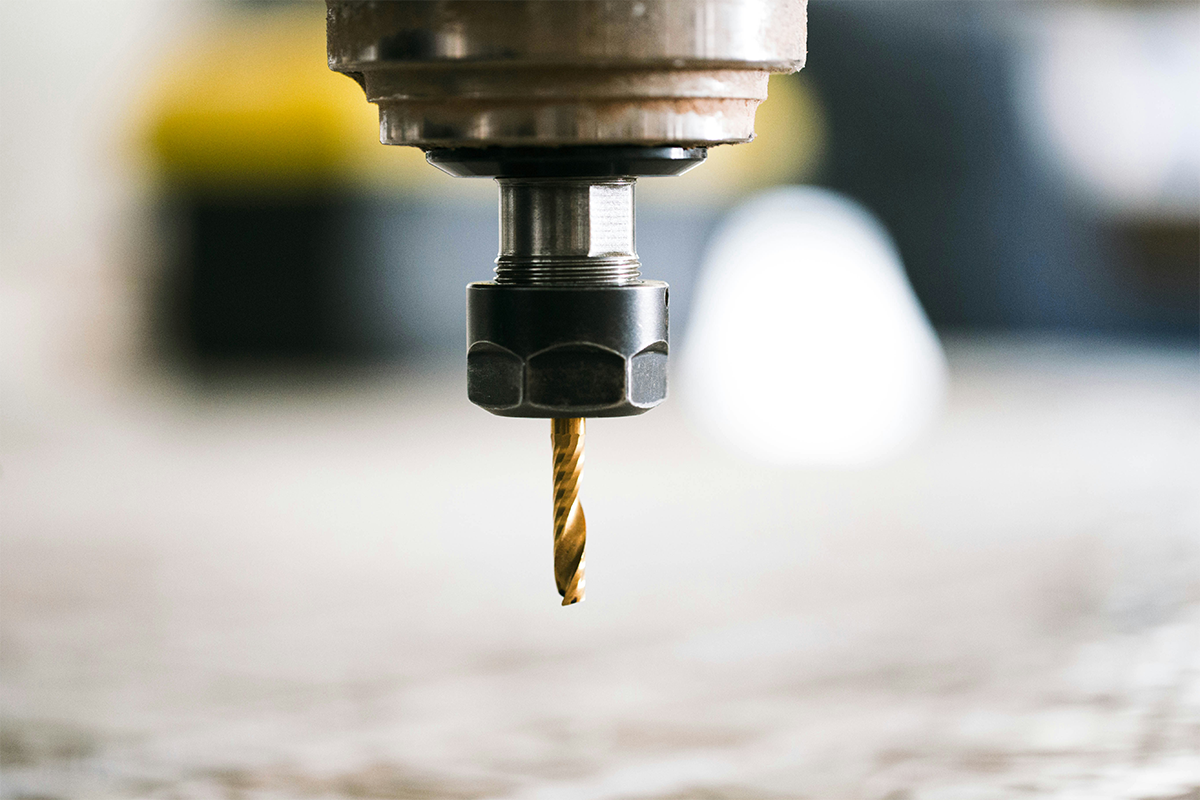
Threading is a vital manufacturing process. Threads connect automotive parts, aerospace components, and industrial equipment. They create strong joints, ensure sealing, and enable repairs. Quality thread manufacturing directly affects product durability and safety. As technology advances, threading tools are evolving to meet higher precision and efficiency demands. Let's explore the latest trends and future of threading tools.
Today, threading tools are advancing toward higher precision, longer service life, and stronger adaptability. Manufacturers need tools that handle tough materials, reduce cycle time, and maintain consistent quality. Solid carbide thread mills, advanced coatings, and CNC-controlled machining are key developments. These improvements help produce accurate internal and external threads with less manual work. The industry is also moving toward flexible and customized threading solutions for different applications.
1. Evolution of Threading ToolsThreading tools have changed greatly over time. Early threading relied on hand taps, dies, and simple cutting tools. These tools worked but required skilled labor and took more time. They also had limitations in speed, accuracy, and tool life.
CNC machining brought major improvements. Thread milling became a popular alternative to tapping. A thread mill rotates and follows a helical path to cut threads inside or outside a workpiece.
Thread milling offers clear advantages:
- Better thread size control and precision.
Lower cutting force than many tapping operations.
Reduced risk of tool breaking inside a hole.
Adjustable thread sizes through tool offset settings.
Stronger performance in blind holes and hard materials.
2. Material Innovation: The Rise of Carbide
Tool material directly affects cutting performance. High-speed steel tools are still common for general threading. However, solid carbide tools are becoming the preferred choice for precision and high-efficiency machining.
Carbide threading tools provide important benefits:
High hardness:
Solid carbide resists wear and keeps sharp cutting edges longer.Heat resistance: It performs well under high cutting temperatures when the correct grade is selected.
Stable geometry: Fine-grain carbide supports accurate edge sharpness and consistent tool shape.
Longer tool life: Fewer tool changes improve productivity and lower production costs.
At Qinray, solid carbide is a core material in threading tool production. The company focuses on precision carbide cutting tools and develops threading solutions for different workpiece materials and machining requirements.
3. Advanced Coatings Improve Performance
Tool coating technology is another major factor in threading tool development. Even a strong carbide base needs the right coating for stable cutting.
Modern coatings help reduce friction, resist heat, and protect the cutting edge during machining.
Common coating benefits include:
-
Less friction between tool and workpiece.
-
Better heat resistance during threading.
-
Improved wear protection.
-
More stable cutting performance.
-
Longer usable tool life.
No single coating works for every material. The best choice depends on workpiece hardness, cutting speed, coolant use, and machining conditions.
Qinray offers different coating options for its carbide cutting tools. For example, its full-profile thread mills include a bronze-coated grade for steel and difficult-to-machine alloys, as well as a rainbow-coated grade for aluminum, brass, copper, and PVC.
This material-based selection helps users choose tools that better match their production needs.
4. CNC Technology Is Redefining Thread Machining
CNC systems have changed thread production. With helical interpolation, thread mills can cut precise threads using controlled tool paths.
CNC thread milling provides more flexibility than traditional tapping. This is especially useful when manufacturers need different thread sizes or work with expensive parts.
There are two main types of thread milling cutters:
Single-tooth thread milling cutters
A single-tooth cutter creates a thread through several helical passes. Since pitch is controlled by the CNC program, one tool can produce different thread pitches within its working range.
This makes it useful for small-batch production, deep holes, thin-wall parts, and mixed machining tasks.
Full-profile thread milling cutters
A full-profile cutter has the complete thread shape formed on its cutting edges. It can machine the thread profile in about one revolution.
This makes it practical for repeated production jobs and batches that require consistent thread quality.
Qinray offers both single-tooth and full-profile solid carbide thread mills. This helps customers choose tools based on thread specifications and production requirements.
5. Industry Applications and Qinray Tool Examples
Precision threading is essential in many industries. Different applications require different thread forms, materials, and machining methods.
Here are three examples from Qinray's threading tool range.
BSPP Thread Mill for Pipe Connections
BSPP thread mills are designed for 55° BSPP parallel pipe threads according to ISO 228-1.
These threads are widely used in hydraulic and pneumatic fittings, valve bodies, manifolds, and pump housings.
Qinray's BSPP thread mills are made from solid carbide and can machine materials such as cast iron, stainless steel, titanium alloys, mold steel, and nickel alloys.
Single-Tooth Thread Mill for Flexible Machining
Qinray's single-tooth thread mill is designed for 60° ISO metric threads under ISO 68-1 and ISO 261.
Its flexible programming supports different thread pitches without needing a separate tool for each size. It is especially useful for blind holes, deep bores, thin-wall parts, and interrupted threads.
Full-Profile Thread Mill for Production Efficiency
Qinray's full-profile thread mill is designed for 60° ISO metric threads, with a standard range from M2 to M30.
Its complete thread profile allows threads to be formed in approximately one revolution. It is suitable for production batches where speed and repeatability are important.
These examples show how different thread milling designs solve different production challenges.
6. Customization Is Becoming a Key Trend
Standard threading tools meet many common needs. However, some parts require special thread sizes, limited space, unusual materials, or non-standard drawings.
In these cases, customized tools provide a better solution.
A professional cutting tool manufacturer should consider several factors when developing a custom threading tool:
-
Thread type, pitch, and diameter.
-
Workpiece material and hardness.
-
Required thread depth.
-
Machine tool and spindle conditions.
-
Cutting geometry and coating selection.
-
Production volume and quality requirements.
Qinray specializes in solid carbide cutting tools and non-standard customization. Founded in 2016, the company uses Walter and Hawema CNC grinding machines from Germany to produce precision cutting tools.
Its customization process covers drawing confirmation, geometry and tolerance review, quotation, CNC grinding, quality inspection, and delivery. For most custom tools, the lead time is 7–10 days, with a minimum order quantity of 5 pieces.
This approach helps customers create tooling solutions that match their actual machining conditions.
7. Future Developments in Threading Tools
Threading tools will keep evolving as manufacturing demands change.
Several trends will likely shape the future:
Higher precision: More complex parts will require tighter thread tolerances and consistent machining results.
Better tool materials: Improved carbide grades and coatings will increase wear resistance and cutting stability.
Smarter CNC machining: Advanced CNC systems and process monitoring will improve consistency and reduce errors.
More customized solutions: Specialized product designs will increase demand for application-specific threading tools.
Greater productivity focus: Manufacturers will value tool life, cycle time, and total production efficiency instead of tool price alone.
8. Choosing the Right Threading Tools
Selecting the right threading tool is essential for accurate threads and stable production.
Before choosing a tool, consider the workpiece material, thread standard, pitch, depth, machining method, and production volume. If using thread milling cutters, make sure your CNC machine supports helical interpolation.
For specialized jobs, working with an experienced cutting tool manufacturer can reduce selection errors and improve machining results.
Qinray provides solid carbide threading tools, including BSPP, single-tooth, and full-profile thread mills, as well as customized precision cutting tool solutions.
With professional CNC grinding equipment, material-based tool options, and flexible customization services, Qinray supports manufacturers looking for reliable threading solutions.
Contact Qinray to discuss your threading requirements and find a suitable carbide thread milling solution for your application.


