How to Choose the Right Reamer Material and Coating for High-Performance Machining
News Details
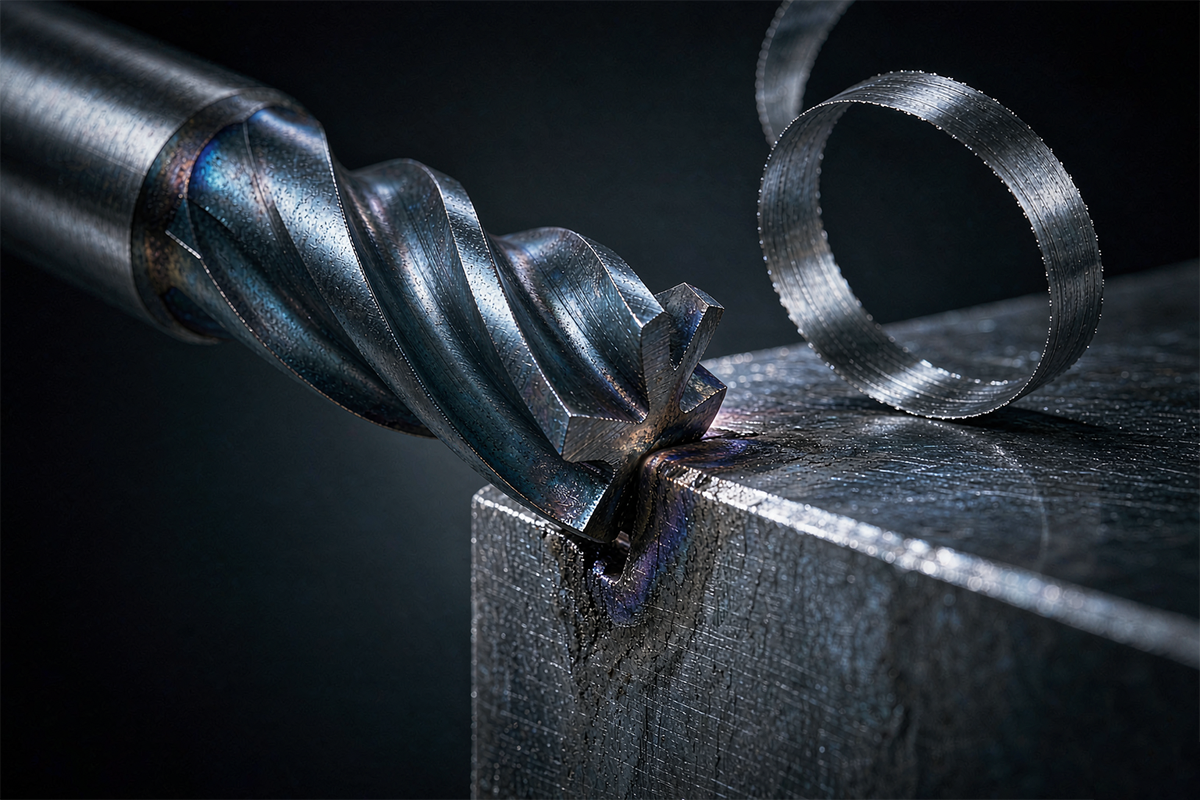
When your shop floor handles high production volumes, standard cutting tools often wear out too fast. If your reamers dull quickly, hole sizes drift and scrap rates rise,driving up your production costs.To fix this, you need to take a closer look at your tooling strategy.Choosing the right carbide substrate and protective coating makes a massive difference in tool life and part quality. At Qinray, we specialize in building high-performance solid carbide cutting tools tailored to your exact manufacturing needs. Below, we break down how to select the best materials and coatings for your specific machining tasks.
Why Reamer Material Matters for Precision Hole Making
A reamer is vital for achieving tight dimensional tolerances and smooth surface finishes after drilling. However, different workpiece materials require different tool substrates. Tungsten carbide is renowned for its hardness and wear resistance.Even so, not all carbide grades perform the same way on the shop floor.
When designing custom reamers, toolmakers must balance two key properties: hardness and toughness.
-
Ultra-Fine Grain Carbides:These offer exceptional hardness and razor-sharp cutting edges.They work best when you need mirror-like surface finishes on abrasive materials like cast iron or aluminum alloys.For example, many precision coolant-through reamers use 0.4$\mu m$ fine-grain tungsten carbide to maintain cutting edge integrity.
-
Coarser-Grain Carbides:These offer higher toughness and impact resistance.They excel in interrupted cuts or heavy-feed applications where brittle tools would easily chip or break.
By matching the carbide grade to your workpiece material—whether carbon steel, alloy steel, or stainless steel—you ensure stable cutting performance from the very first part.
The Role of PVD Coatings in Extending Tool Life
Even the highest-grade carbide benefits from extra surface protection.High-speed CNC machining generates intense heat and friction at the cutting edge.Without a protective barrier, this thermal stress softens the tool and accelerates wear.Modern physical vapor deposition (PVD) coatings act as both a thermal shield and a friction reducer.
At Qinray, we offer specialized coating options designed to match your operational requirements:
-
SP Coating: Applied to selected drills and reamers to improve wear resistance and maintain machining stability during continuous runs.
-
SA Coating:Tailored for custom tools designed to efficiently machine specific workpiece materials.
-
DLC (Diamond-Like Carbon) Coating:Ideal for non-ferrous and highly abrasive materials, providing extreme surface hardness and ultra-low friction.
-
TiAlN (Titanium Aluminum Nitride): Perfect for high-heat, dry machining environments. It forms a protective aluminum oxide layer at elevated temperatures, shielding the tool from thermal breakdown.
These advanced coatings reduce cutting forces, prevent metal chips from sticking to the edges, and allow your CNC machines to run at higher speeds without burning out the tool.
Optimizing Coolant and Tool Geometry for Superior Results
Material and coating choices alone don’t guarantee success. Tool geometry and coolant delivery play an equally important role in high-performance reaming. For example, coolant-through reamers deliver fluid directly to the cutting zone. This smart design achieves two key goals: it flushes away metal chips instantly to prevent recutting, and it cools the cutting zone immediately to keep thermal expansion under control.
Additionally, working with an experienced manufacturer allows you to customize flute counts, helix angles, and shank types based on your part drawings.Whether you need stepped reamers, taper reamers, or form reamers, proper customization eliminates secondary operations and lowers your total cost per hole.
Partner with Qinray for Custom Precision Cutting Tools
Choosing the right reamer material and coating is essential for modern manufacturing success in the automotive, aerospace, and mold-making industries.Founded in Changzhou, China, Qinray combines advanced German Walter and Hawema CNC five-axis grinding equipment with strict quality inspection systems to deliver reliable cutting tools worldwide.
If your current reamers wear out too quickly or fail to meet tight tolerances, contact our engineering team today. Send us your part drawings, workpiece material specifications, and machining requirements, and let us help you design the ideal custom reamer solution for your shop floor.


